
Inadmissibility & Special Immigration Matters
When an Immigration Concern May Affect Your Ability to Enter or Remain in Canada
Immigration inadmissibility can be stressful and complicated. Being found inadmissible can have significant consequences for your immigration plans. A previous criminal offence, removal from Canada, or other circumstances may affect your ability to obtain a visa, permit, or permanent residence.
At Altezza Immigration and Refugee Services, we help individuals understand potential inadmissibility concerns and explore the immigration options that may be available based on their circumstances. We provide personalized guidance for matters involving Temporary Resident Permits (TRPs), Criminal Rehabilitation, Authorization to Return to Canada (ARC), and other inadmissibility-related applications.
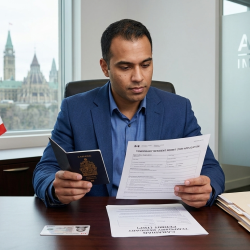
Temporary Resident Permit (TRP)
Guidance for individuals who may be inadmissible to Canada but have compelling reasons to enter or remain in Canada temporarily.

Criminal Rehabilitation
Assistance with applications for individuals who may be considered criminally inadmissible because of past criminal activity.

Authorization to Return to Canada (ARC)
Guidance for individuals who have previously been removed from Canada and may require authorization to return.
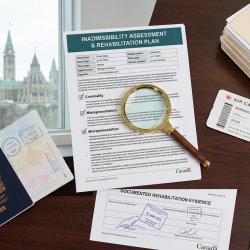
Inadmissibility Assessment
A review of your circumstances to identify potential inadmissibility concerns and discuss possible immigration options.
Understanding Canadian Immigration Inadmissibility

Temporary Resident Permit (TRP)
A TRP may provide a temporary solution for certain individuals who are otherwise inadmissible to Canada. A TRP may be considered where an individual has a compelling reason to enter or remain in Canada despite being inadmissible.
We can assist with:
- Assessing potential TRP eligibility
- Reviewing the circumstances surrounding inadmissibility
- Identifying the reasons for requiring entry or stay in Canada
- Preparing supporting documentation
- Developing a clear explanation of the circumstances
- Preparing and reviewing the application
- Responding to additional document requests, where applicable
A TRP is discretionary and approval is not guaranteed. Each application should clearly explain the applicant’s circumstances and reasons for requesting temporary admission to Canada.
Criminal Rehabilitation
Past criminal activity does not necessarily mean that you will always be unable to enter Canada. Individuals who may be criminally inadmissible because of past criminal activity may, depending on their circumstances, be eligible to apply for criminal rehabilitation.
We can assist with:
- Reviewing your criminal history
- Assessing potential Canadian criminal inadmissibility
- Reviewing the dates and circumstances of offences
- Determining whether rehabilitation may be an available option
- Preparing supporting documentation
- Preparing and reviewing the rehabilitation application
- Addressing potential concerns with the application
Criminal inadmissibility can be highly fact-specific. A careful assessment is important before deciding which option may be appropriate.
Authorization to Return to Canada (ARC)
If you have previously been removed from Canada, you may need authorization before returning. Depending on the type of removal order and the circumstances surrounding your departure, an Authorization to Return to Canada (ARC) may be required.
We can assist with:
- Reviewing your previous removal from Canada
- Identifying the type of removal order involved
- Reviewing your immigration history
- Assessing whether an ARC may be required
- Preparing supporting documentation
- Explaining the circumstances surrounding your previous departure
- Preparing the application and supporting submissions
Each situation is different, and the requirements can depend on the type of removal order and the applicant’s circumstances.
Understanding Inadmissibility
Immigration inadmissibility can arise for different reasons.
Potential grounds of inadmissibility may include:
- Criminality
- Serious criminality
- Medical inadmissibility
- Misrepresentation
- Security concerns
- Financial reasons
- Failure to comply with immigration requirements
- Previous removal from Canada
- Other grounds established under Canadian immigration legislation
Not every inadmissibility situation has the same solution.
The first step is understanding the specific concern and determining whether a remedy or immigration option may be available.
Previous Refusal or Inadmissibility Finding
Have you already received a refusal? If your application has been refused because of an inadmissibility concern, submitting the same application again may not resolve the underlying issue.
We can review:
- Your refusal letter
- Previous applications
- Immigration history
- Criminal or other inadmissibility concerns
- Supporting documentation
- The reasons identified by Canadian immigration authorities
Based on the circumstances, we can help you understand the potential options available to address the concern.